S3E07 - The Bourne Series and Chaos Cinema
Extreme ways are back! In pog form! This week we’ve got a wonderful little discussion about the evolution of the Jason Bourne film series. In particular, we’re here to dissect how Paul Greengrass transformed it into the 21st century’s foremost example of Chaos Cinema. Handheld camerawork, fast editing, questionable focus? It’s all here, and we’re here to sift through the wreckage.
Extreme ways are back! In pog form! This week we’ve got a wonderful little discussion about the evolution of the Jason Bourne film series. In particular, we’re here to dissect how Paul Greengrass transformed it into the 21st century’s foremost example of Chaos Cinema. Handheld camerawork, fast editing, questionable focus? It’s all here, and we’re here to sift through the wreckage.
In this episode, we discuss:
Shaky handheld camerawork: good, evil, or neither?
Rapid cutting: good, great, or greatest?
The specific methodologies and effects of these techniques in Paul Greengrass’s Bourne films
The influence of The Bourne Supremacy and Ultimatum on subsequent action cinema
If you’d like to support the show, here’s a link to our Patreon.
Media:
Matthias Stork’s Video Essay on Chaos Cinema
David Bordwell’s Jason Bourne Blog Posts: 1 2
Patrick Willems’s breakdown of the car chase in Quantum of Solace, includes discussion of Supremacy’s car chase.
Visual illustration of the “Elbow Flip” moment discussed in this episode:


Relevant clip starts at 2:13
Works discussed during this episode:
Bloody Sunday (2002)
The Bourne Identity (2002)
The Bourne Supremacy (2004)
The Bourne Ultimatum (2007)
Speed Racer (2008)
Jason Bourne (2016)
S3E06 - Wes Craven's Meta Horror with Mike Thorn
Geez, it’s been a while since we got spooky on the show, hasn’t it? High time we brought back Mike Thorn to talk about how Wes Craven fused meta storytelling and horror in two franchises: A Nightmare on Elm Street and Scream. We’ll permeate the membranes of reality, disassemble Craven’s views on horror’s social and political value, and laugh about how Matthew Lillard yells “BOO-GAH” when he imitates a gunshot.
Geez, it’s been a while since we got spooky on the show, hasn’t it? High time we brought back Mike Thorn to talk about how Wes Craven fused meta storytelling and horror in two franchises: A Nightmare on Elm Street and Scream. We’ll permeate the membranes of reality, disassemble Craven’s views on horror’s social and political value, and laugh about how Matthew Lillard yells “BOO-GAH” when he imitates a gunshot.
Mike has a terrific new horror novel, Shelter for the Damned, that you can check out in print or e-book format directly through Journalstone, or you can find it on Amazon, Barnes and Noble, or Walmart.
In this episode, we discuss:
Wes Craven’s philosophy of horror and how he weaves that philosophy into his plots.
The real-life contexts that deepen (and are deepened by) these films.
The value of stories, the value of dreams, the value of horror.
A darn good set of movies — you owe it to yourself to check these all out.
If you’d like to support the show, here’s a link to our Patreon.
Media:


Craven’s characters make their final crossings through the hazy barriers of their realities, passively or forcefully, tragically or heroically.
Works discussed during this episode:
A Nightmare on Elm Street (1984)
Wes Craven’s New Nightmare (1994)
Scream (1996)
Scream 2 (1997)
Scream 3 (2000)
Scre4m (2011)

Mike Thorn
Mike Thorn is the author of Darkest Hours and Dreams of Lake Drukka & Exhumation. His debut novel Shelter for the Damned will be released through JournalStone in 2021.
His fiction has appeared in numerous magazines, anthologies and podcasts, including Dark Moon Digest, The NoSleep Podcast, DarkFuse, Unnerving Magazine, Turn to Ash and Tales to Terrify. His film criticism has been published in MUBI Notebook, The Film Stage, The Seventh Row, Bright Lights Film Journal and Vague Visages.
He completed his M.A. with a major in English literature at the University of Calgary, where he wrote a thesis on epistemophobia in John Carpenter’s Prince of Darkness.
S3E05 - After Last Season and Outsider Art with Bram Ruiter
An Anti-Masterpiece is, as defined by our own Will Ross, is “an astonishing, essential work of art in spite of a distinct lack of conventional competence on the part of its makers”. After Last Season by Mark Region is one such film, and we’ve invited filmmaker Bram Ruiter to discuss it with us. In what is very much not a “bad movie” episode, we attempt to grapple with the nature of outsider art.
An Anti-Masterpiece is, as defined by our own Will Ross, is “an astonishing, essential work of art in spite of a distinct lack of conventional competence on the part of its makers”. After Last Season by Mark Region is one such film, and we’ve invited filmmaker Bram Ruiter to discuss it with us. In what is very much not a “bad movie” episode, we attempt to grapple with the nature of outsider art.
In this episode, we discuss:
The value of different competent cinema.
The many, many mysteries behind the production of After Last Season
More realism in cinema: Mark Region’s seeming insistence on pushing the boundaries of acceptable cinematic ‘reality’.
If you’d like to support the show, here’s a link to our Patreon.
Additional Resources:
Jason Coffman’s Article on After Last Season
Jason Coffman’s Follow-Up Oral History with the Cast and Crew
Filmmaker Magazine’s interview with director Mark Region
Media:
Works discussed during this episode:
After Last Season (2009)
The Room (2003)
Street Fighter: The Movie (1994)
Inland Empire (2006)
The Treasure Planet (1982)

Bram Ruiter is a filmmaker based in The Netherlands. With his films, he examines the creative process and observes social, textural, and narrative structures.
He has recently finished A Weave of Light, a short experimental work inspired by an undeveloped roll of super8. His previous work includes Perpetual Spawning , an experiment with time-based systems, while Endless Sea and Infinite Skies are concerned with purgatory.
There's also a duo of travelogues: No Service and Die Labirint, which focus on the difficulties of long-distance relationships.
And back in 2014, he co-created the documentary series Super Game Jam. This project inspired him to make many more documentaries such as Beyond the Usual (about modern dance choreographers) and Small and Personal and Tranquil (about a media arts festival).
S3E04 - Eighth Grade and the Internet with Bronwyn Henderson and Brietta Stewart
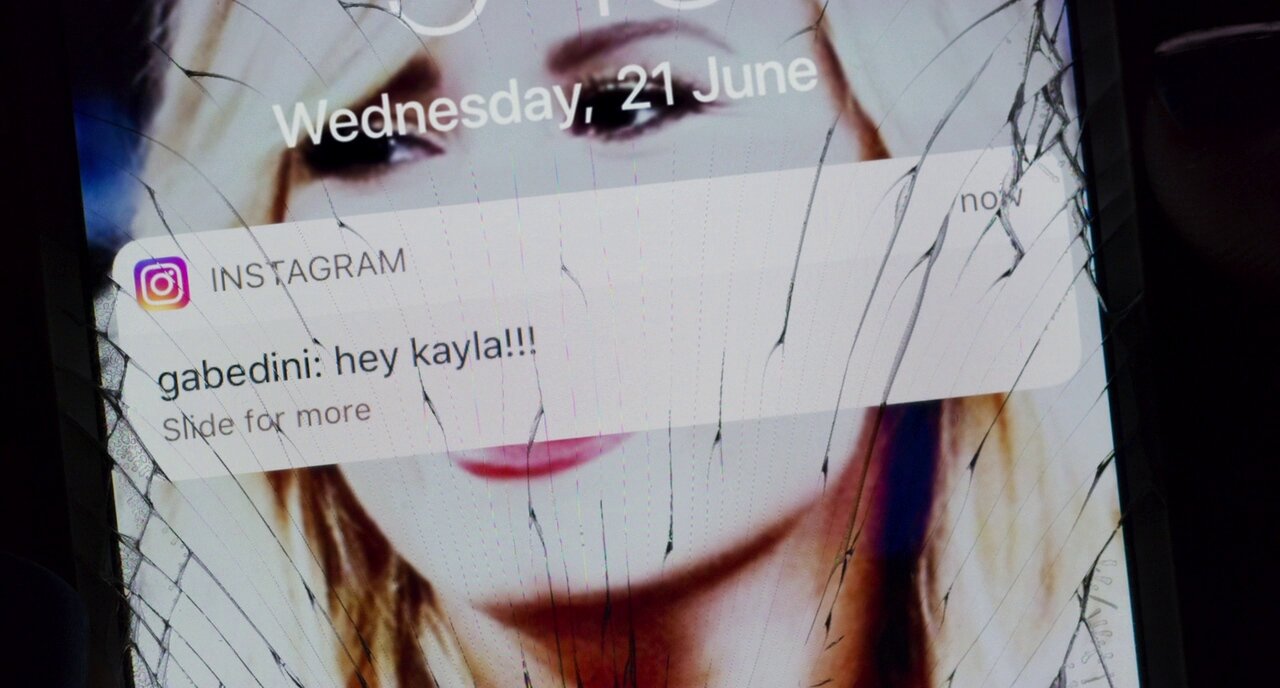
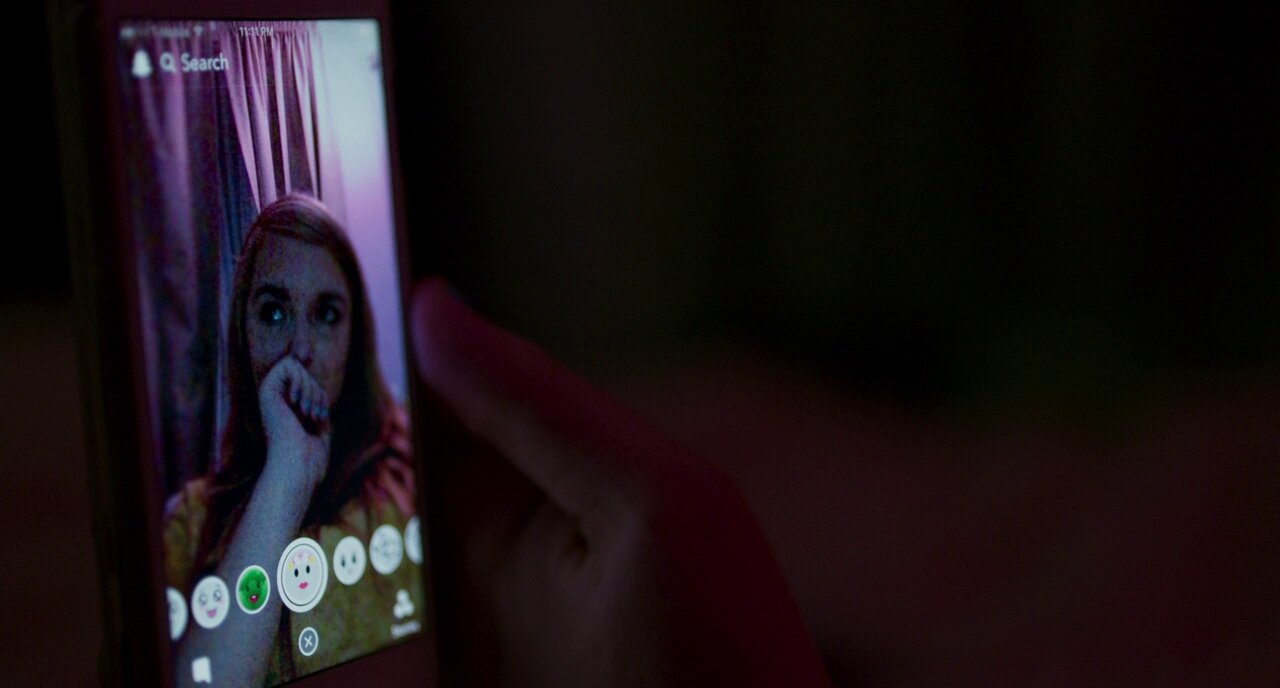
For this episode our Associate Producer Paige Smith has relieved Devan and Will of hosting duties so that she can talk about Eighth Grade’s depiction and use of the Internet — and she’s brought on two friends who survived eighth grade with her, Bronwyn Henderson and Brietta Stewart. It's both a dive into how the film interweaves screens and scrolling with its characters and dramatic presentation, and a personal reflection on how strange and hard it is to grow up — and how much "growing up" has changed.
For this episode our Associate Producer Paige Smith has relieved Devan and Will of hosting duties so that she can talk about Eighth Grade’s depiction and use of the Internet — and she’s brought on two friends who survived eighth grade with her, Bronwyn Henderson and Brietta Stewart. It's both a dive into how the film interweaves screens and scrolling with its characters and dramatic presentation, and a personal reflection on how strange and hard it is to grow up — and how much "growing up" has changed.
In this episode, we discuss:
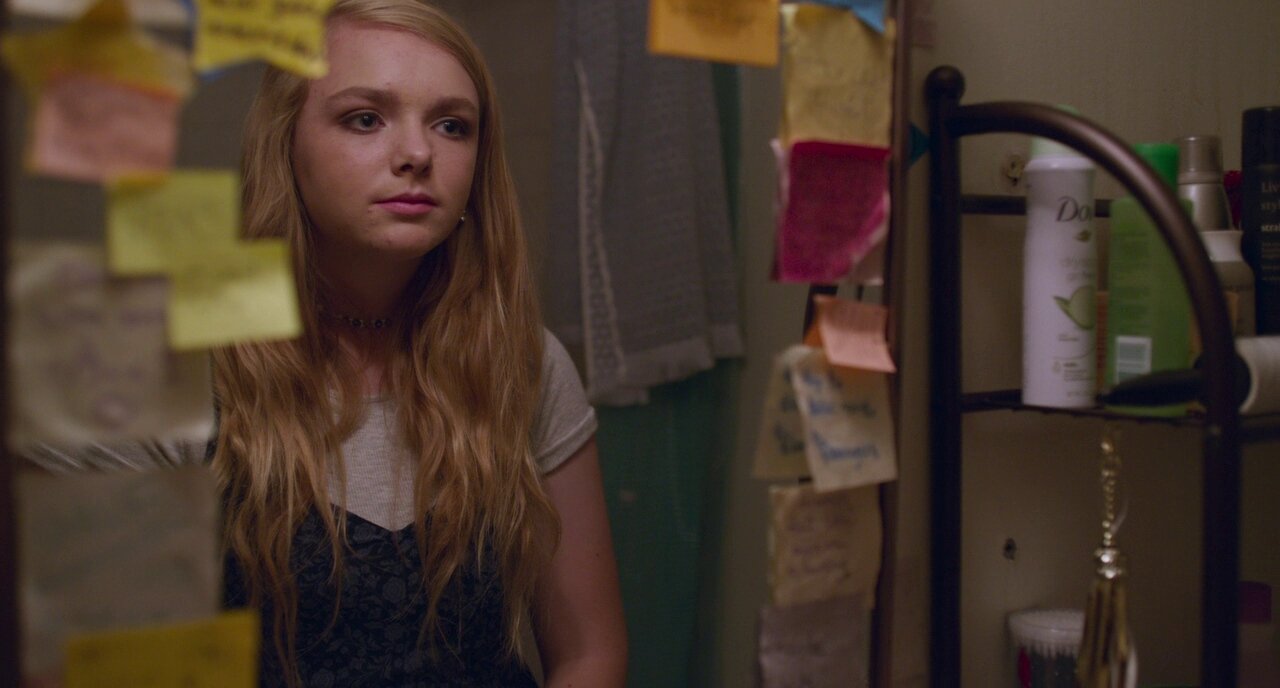
How Eighth Grade created the content on screens differently from other productions
The symbiosis and melding of the Internet with youth identity.
Internet as an ally of self-actualization for kids; Internet as an enemy of self-actualization for kids
Mortifying moments in sex-ed class!
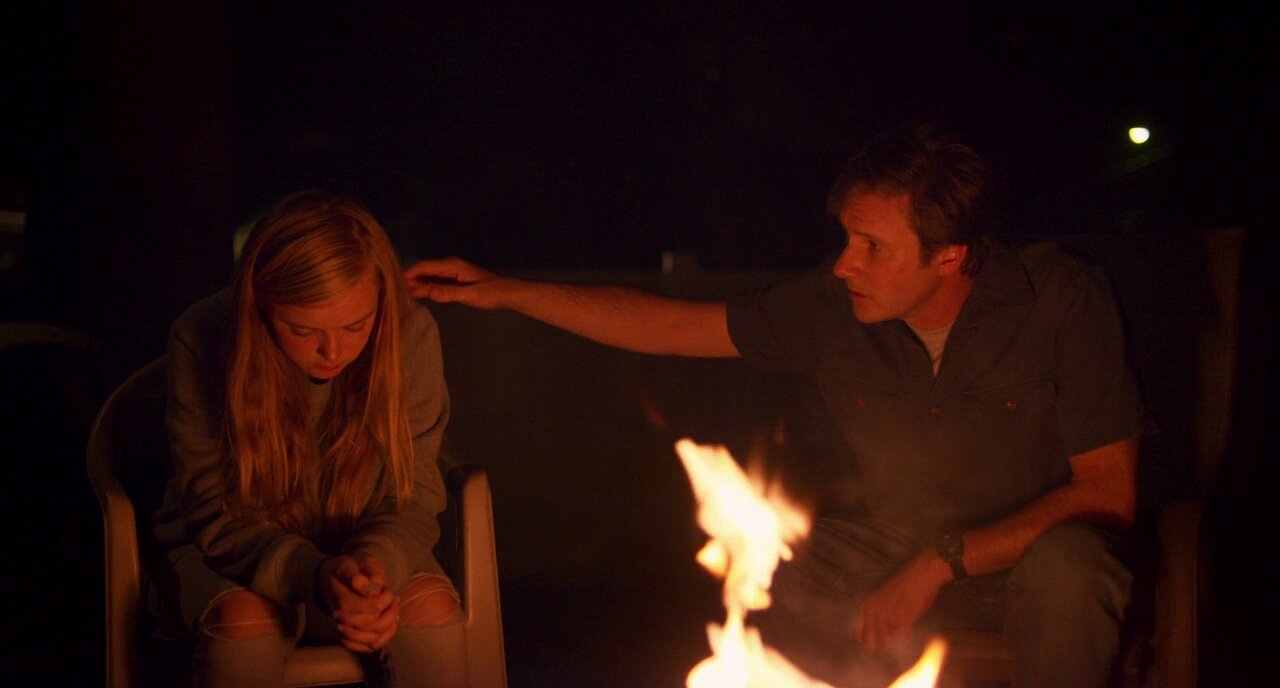
How the lighting of Eighth Grade both persuades us of its reality and generates meaning.
If you’d like to support the show, here’s a link to our Patreon.
Additional Resources:
Image Gallery

Works discussed during this episode:
Eighth Grade
Sherlock
The Fault in Our Stars

brietta stewart
brietta completed her undergraduate degree at the University of Toronto with a major in cinema studies. She has special interests in intermedial, experimental and feminist film. Her first publication "An Integration of Cinema and Literature: Towards Intermedially Reading the Screen Like a Page'' (Camera Stylo) examines various modes of sexual storytelling through animation. Currently, she is completing her JD at Thompson Rivers University where she is the co-founder of the Law & Film Club.
Twitter: @briettastewart
Instagram: @brietta_

Bronwyn Henderson:
Bronwyn is a theatre, voice & film actor based in Vancouver. Recently, she appeared in La Cartographe (dir. Nathan Douglas) which is streaming now on CBC Gem. Some of her recent theatre credits include:The Russian Play (Lovecat Theatre/ Vancouver Fringe Festival), Tiny Replicas (Tremors/Rumble Theatre),girls!girlsgirls! (Excavation Theatre), and The Imaginary Invalid (United Players). Bronwyn is a graduate of the UBC BFA in Acting program.
Instagram: @bronnyhenderson
S3E03 - Documentary Verite with Sophy Romvari
In part two of our Verite series we discuss truth in documentary filmmaking with returning guest Sophy Romvari. Sophy’s films have increasingly blurred the line between fact and fiction and are often classified as ‘hybrid’ documentaries. What can we learn from this type of fusion cinema? We go deep on the existential questions that inevitably ensue when one claims to be telling a ‘truth’ and explore the various ways different filmmakers have sought to build ideological frameworks for reaching their truths.
In part two of our Verite series we discuss truth in documentary filmmaking with returning guest Sophy Romvari. Sophy’s films have increasingly blurred the line between fact and fiction and are often classified as ‘hybrid’ documentaries. What can we learn from this type of fusion cinema? We go deep on the existential questions that inevitably ensue when one claims to be telling a ‘truth’ and explore the various ways different filmmakers have sought to build ideological frameworks for reaching their truths.
In this episode, we discuss:
Documentary, the genre: a contract?
‘Hybrid’ documentary and the mix of fact and fiction
Cinema Verite and Direct Cinema: they’re different!
The Ecstatic Truth and Werner Herzog
Errol Morris’ epistemological meat grinder: is truth connected with style?
Kirsten Johnson and Cameraperson
Ethical representation of documentary subjects.
If you’d like to support the show, here’s a link to our Patreon.
Additional Resources:
Media:
Works discussed during this episode:
Chronicle of a Summer
Into the Abyss
Documentary Now!
Shoah
Salesman
The Thin Blue Line
Cameraperson
The Office

Sophy Romvari is a filmmaker born in Victoria, B.C. and based in Toronto. Her critically-acclaimed short films have travelled the international festival circuit and have earned her a reputation as a leading young talent. Her filmmaking is mostly autoethnographic with a focus on processing trauma, either personally or collectively. She is playful in her approach to documentary as a form, blurring the lines between fiction and reality.
Her hybrid documentary Pumpkin Movie premiered at True/False festival in St. Louis to considerable praise, before bowing at Hot Docs and Sheffield Doc Fest, among many others. It toured cinemas across the United States as part of the Eyeslicer Halloween Special in October 2018. Pumpkin Movie has been praised by critics as "a lovely, subtle work of feminist protest."
In 2018 her short Norman Norman received its world premiere at the Toronto International Film Festival, where critics described it as “a rich, fully developed narrative, bridging the gulf between denial and acceptance in a mere seven minutes.” The film was the centerpiece of “Super Succinct and Radically Direct,” a retrospective of Sophy’s work at the Museum of the Moving Image in New York City, and was selected as the best short film of the year by rogerebert.com critic Justine Smith.
Sophy recently completed her Masters at York University during which she shot her most recent short film, Still Processing.
S3E02 - Narrative Verite with Whit Stillman
We're doing two episodes on truth in cinema, starting with one on standards of reality in narrative films. Whit Stillman (The Last Days of Disco, Love & Friendship) joined us, largely to register his animosity towards the idea of making stylistic decisions based on realism, and shared his thoughts on aesthetic decline, pretension, and the meowling cat sound in Damsels in Distress.
We're doing two episodes on truth in cinema, starting with one on standards of reality in narrative films. Whit Stillman (The Last Days of Disco, Love & Friendship) joined us, largely to register his animosity towards the idea of making stylistic decisions based on realism, and shared his thoughts on aesthetic decline, pretension, and the meowling cat sound in Damsels in Distress.
In this episode, we discuss:
The cruelty of a camera lens trained on unadorned subjects.
The rise of “visual storytelling” in the post-silent era.
Did a dreamy reality compromise the reception of Damels in Distress?
Why the music in The Last Days of Disco doesn’t sound like an American disco.
The balance between believable-enough and expressive-enough.
“Cheating”.
More audio restoration!
If you’d like to support the show, here’s a link to our Patreon.
Additional Resources:
Works discussed during this episode:
Metropolitan (1990)
Barcelona (1994)
The Last Days of Disco (1998)
Russian Ark (2002)
Damsels in Distress (2011)
Love & Friendship (2016)
Media:
Blown-out lighting in Damsels in Distress
![damsels.in.distress.2011.limited.720p.bluray.x264-sparks.mkv_snapshot_00.16.02_[2021.01.25_20.45.35].png](https://images.squarespace-cdn.com/content/v1/578e7a0c197aea26a696f7f1/1611636408001-0J8WILKQB1USUK63NBRI/damsels.in.distress.2011.limited.720p.bluray.x264-sparks.mkv_snapshot_00.16.02_%5B2021.01.25_20.45.35%5D.png)

Whit Stillman is the writer and director of the films Metropolitan, Barcelona, The Last Days of Disco, Damsels in Distress, and Love & Friendship, and has written novelizations for many of them.
S3E01 - Film Preservation and Home Video with Blake Blasingame
Welcome to season 3! To kick things off, we’ve brought Duplitech Film Services Manager Blake Blasingame in to discuss film preservation and mastering for home video. Are you ready for 88 minutes of unadulterated shop talk about grain structure, bit depth, oversampling, color grading, and vinegar syndrome? Of course you are! This is Film Formally, after all.
Welcome to season 3! To kick things off, we’ve brought Duplitech Film Services Manager Blake Blasingame in to discuss film preservation and mastering for home video. Are you ready for 88 minutes of unadulterated shop talk about grain structure, bit depth, oversampling, color grading, and vinegar syndrome? Of course you are! This is Film Formally, after all.
In this episode, we discuss:
The process of preserving and restoring films for Blu-Ray and DVD releases.
Scan resolutions - 4k, and the value of oversampling.
Vinegar syndrome: the silent killer.
How film elements are sourced for scans - negatives, IPs, IBs, and release prints.
Robert Richardson and revisionism.
William Peter Blatty and the restoration of the lost Legion cut of The Exorcist III
More audio restoration!
If you’d like to support the show, here’s a link to our Patreon.
Additional Resources:
Works discussed during this episode:
Snow Falling on Cedars
The Exorcist III / Legion
The Thing
The French Connection
The Big Lebowski
Blade Runner 2049
Mad Max: Fury Road
The Heartbreak Kid
The works of Wong Kar-Wai
Media:
Suspiciously similar restoration colour grades:


Further reading on the Ritrovata and Eclair grading controversy can be seen here.

Blake Blasingame is Film Services Manager at Duplitech, a media service lab based out of Torrance, California. He supervises the mastering workflow for multiple home video labels, with a primary concentration in digitizing and restoring catalog titles. An alumnus of NYU’s Tisch School of the Arts ( B.F.A., Film & Television 2010 ), Blake is passionate in his efforts to preserve motion picture film. He is also an independent filmmaker with a couple of shorts and a feature ( Cry Murder, 2012 ) under his belt.
Season 2 Intermission Q&A
It’s our second SEASON BREAK SPECTACULAR! You sent us some great questions, and we answered them.
It’s our second SEASON BREAK SPECTACULAR! You sent us some great questions, and we answered them.
Per our answer early in the pod, you can check out https://native-land.ca/ to see which indigenous territory you might live on (bear in mind it’s not comprehensive or “official”). There’s a good explanation of land acknowledgments there, too. If you’d like to support the show, here’s a link to our Patreon.
Your questions:
How did you get started in film?
Prognosticate on where micro-budget filmmaking in Canada is going. Wild speculations are encouraged.
What trends in recent cinema do you like? What do you dislike?
You seem to be open-minded about cinematic techniques as long as there is a contextual justification, but are there any common (or not so common) techniques or aesthetics that you just can’t connect with?
How fruitful do you think it is to discuss montage, camera movement and visual composition as discrete elements? What do you think are the appropriate limits for separation, or requirements for conciliation of these elements in analysis and discussion?
Any thoughts on the authorship of posthumously released films that were completed after the directors death such as the other side of the wind or eyes wide shut?
More of a prompt, but I’d like Devan to wax poetic about 1.66 for a few minutes.
What was the last movie you watched and was it good?
What plans do you have for upcoming seasons?
Additional Resources:
Works discussed during this episode:
1492: Conquest of Paradise (1992)
Crimson Tide (1995)
The Snowman (2017)
Speed Racer (2008)
Eyes Wide Shut (1999)
The Other Side of the Wind (2018)
An Elephant Sitting Still (2018)
Touch of Evil (1958)
The Thief and the Cobbler (unfinished)
Dream Machines (unfinished)
Barry Lyndon (1975)
Vitalina Varela (2019)
Wild Mountain Thyme (2020)
The opening shot of Barry Lyndon in its correct aspect ratio of 1.66:1 (left) and the ratio of 1.78:1 that was incorrectly used for years (right).

S2E10 - Colour in the Films of Wong Kar-Wai
For our season 2 finale, we keep it simple and discuss none other than the use of colour across the works of Wong Kar-Wai. In particular, we discuss the use of colour to evoke emotions, mood, and symbolism in his 21st century masterpieces In The Mood For Love and 2046.
For our season 2 finale, we keep it simple and discuss none other than the use of colour across the works of Wong Kar-Wai. In particular, we discuss the use of colour to evoke emotions, mood, and symbolism in his 21st century masterpieces In The Mood For Love and 2046.
We’ll be taking a break for the holidays, but our regularly scheduled programming will continue in January 2021. And who knows, there might be some bonus episodes coming…
In this episode, we discuss:
The different ways in which colour is utilized and created in cinema: lighting, production design, grading.
Wong Kar-Wai’s evolution as an artist and his highly instinctual and intercultural approach to colour.
Cinematographer Christopher Doyle’s approach to colour.
The new restorations of Wong Kar-Wai’s cinema, and the possible issues therein. AKA: “In the Mood For Love: was it always this green?”
If you’d like to support the show, here’s a link to our Patreon.
Additional Resources:
Works discussed during this episode:
By Wong Kar-Wai:
Days of Being Wild
Chungking Express
Fallen Angels
Happy Together
In The Mood For Love
2046
By Others:
Apocalypse Now
Dick Tracy
Media:
S2E09 - Justice League: The Snyder Cut
It’s an emergency, time for a podcast! This week, we’re discussing the sordid tale of the DC comics behemoth blockbuster Justice League. Initially released in 2017 to much disappointment after extensive Joss Whedon-helmed reshoots, it’s taken on a new life after a movement around releasing original director Zack Snyder’s preferred cut formed. What has ensued is a confusing stream of contradictory information, and we’re here to sort it out!
It’s an emergency, time for a podcast! This week, we’re discussing the sordid tale of the DC comics behemoth blockbuster Justice League. Initially released in 2017 to much disappointment after extensive Joss Whedon-helmed reshoots, it’s taken on a new life after a movement around releasing original director Zack Snyder’s preferred cut formed. What has ensued is a confusing stream of contradictory information, and we’re here to sort it out!
In this episode, we discuss:
The mysteries surrounding the mythical “Snyder Cut”: did it ever really exist? Why does the story keep changing?
Aspect ratio revisionism and open matte versions of films.
Brian Wilsom’s sMiLe and the impossibility of truly non-revisionist reconstructions of never-completed works.
The “Black and Chrome” trend.
Devan’s controversial Letterboxd review of Rise of Skywalker.
What IS art, anyways?
If you’d like to support the show, here’s a link to our Patreon.
Additional Resources:
Works discussed during this episode:
Sully
Blade Runner 2049
Batman v. Superman: Dawn of Justice
The Mist
Mad Max: Fury Road (Black and Chrome Edition)
Star Trek: The Motion Picture
Parasite
Son of Saul
Brian Wilson’s sMiLe
Media:
FILM FORMALLY

Film Formally gets granular about how movies work by choosing a technique or trait and studying it through its best examples. Every Tuesday, Independent filmmakers Devan Scott and Willa Ross leverage years of watching and making movies to bring you spirited and approachable conversations, offering brick-by-brick analysis and discussions about how movies work.
Associate Producer: Paige Smith
Current season edited by Amanda Avery
Got an idea? A guest you’d like to hear from? Give us a shout at filmformally@gmail.com.