Episode 8 - Long Takes feat. Elle-Máijá Tailfeathers & Kathleen Hepburn
We’re excited to host filmmakers Elle-Máijá Tailfeathers & Kathleen Hepburn, who join us for a discussion about long takes - shots that last for an extended period of time without cutting - and, in particular, their groundbreaking use of an 90-minute long take in their 2019 feature film The Body Remembers When the World Broke Open. Shot entirely on 16mm film, Hepburn and Tailfeathers collaborated with cinematographer Norm Li to overcome the format’s limitations to achieve this aesthetic feat.
We’re excited to host filmmakers Elle-Máijá Tailfeathers & Kathleen Hepburn, who join us for a discussion about long takes — shots that last for an extended period of time without cutting — and, in particular, their groundbreaking use of an 90-minute long take in their 2019 feature film The Body Remembers When the World Broke Open. Shot entirely on 16mm film, Hepburn and Tailfeathers collaborated with cinematographer Norm Li to overcome the format’s limitations to achieve this aesthetic feat.

In this episode, we discuss:
The production of The Body Remembers When the World Broke Open, particularly in regards to the film’s central formal conceit of a single unbroken long take.
Celluloid-based cinematography and the implications it has for attempts at long takes. In particular: how does one film a single 90-minute take on a format that can only roll for 11 minutes at a time?
On-set sound recording in the context of long takes, and how those recordings can be used to create complimentary soundscapes.
Power dynamics, representation, and how those considerations can guide aesthetic decision-making.
The ‘aura’ surrounding long takes in filmmaking culture.
Additional resources:
A VIFF featurette with behind-the-scenes footage of the making of The Body Remembers When the World Broke Open.
Canadians can stream The Body Remembers When the World Broke Open on iTunes, and Americans can watch on Netflix.
The Body Remembers When the World Broke Open, the 2017 essay by Billy-Ray Belcourt.
Cinematographer Norm Li’s 2019 Interview with Carolyn Wong for the CSC Podcast
The Cinemetrics Database, an index of average shot lengths.


Episode 7 - The Hunger Games and Cinemascope
Today we jumped into one of our favourite topics — the overuse of super a super-wide frame, i.e. cinemascope, in contemporary movies. The Hunger Games is our unfortunate case study today, but the conversation touches on everything from the ratio’s rise to multiplex dominance to whatever the heck Michael Bay is doing with aspect ratios in his Transformers movies. Seriously, what is going on there.
Today we jumped into one of our favourite topics — the overuse of super a super-wide frame, i.e. cinemascope, in contemporary movies. The Hunger Games is our unfortunate case study today, but the conversation touches on everything from the ratio’s rise to multiplex dominance to whatever the heck Michael Bay is doing with aspect ratios in his Transformers movies. Seriously, what is going on there.
In this episode, we discuss:
The different meanings for the word “cinemascope”, both as shorthand for a still-common aspect ratio around 2.39:1, and as a proprietary shooting process used by 20th Century Fox in the 50s and 60s.
The ratio’s gradual shift into dominance as the standard-issue aspect ratio for mainstream cinema.
Why you might choose to use a “scope” ratio instead of a taller/narrower frame — and vice versa.
How The Hunger Games exemplifies the poor creative decisions and consequences of the current cinemascope trend.
Why alternatives to scope are important — and why scope might be less of a box office draw than people think.
Additional resources:


The dress scene in The Hunger Games, where the width of the frame makes it difficult to frame in both the flaming hem and Jennifer Lawrence’s face.
In Die Hard (1988), the bokeh (the part of the image that’s out of focus) is often full of ovals, a telltale result of the anamorphic lenses used to shoot a scope frame that starts out squished in-camera and gets stretched wide later.
The scope frames of Sergio Leone westerns like The Good, the Bad and the Ugly (1966) were accomplished with spherical lenses, an approach that usually offers a lower resolution, but creates less distortion and — when shooting on film — reduces costs more than an anamorphic process.
Many contemporary blockbusters like Sully (2016) are filmed for both a typical 2.39:1 exhibition and a 1.9:1 IMAX presentation, necessitating that filmmakers either privilege one ratio over the other or attempt to compromise between both.
The second film in the Hunger Games series, Catching Fire, presents its entire deathmatch sequence (roughly 50 minutes of the film) in a taller ratio for IMAX as mentioned above. The transition to that ratio is cleverly motivated.
Michael Bay has a particularly idiosyncratic approach, framing different aspect ratios for different cameras to maximize resolution. This can result in some rapid shifting between ratios, even in mundane scenes like this dialogue sequence in Transformers: The Last Knight (2017). It’s kind of a lot.


In The Avengers (2012), one of only two Marvel Cinematic Universe films shot in a 16x9 ratio, the taller aspect ratio permits greater opportunities for verticality in its skyscraper-laden climax.
The eccentrically-presented Widescreen Museum is a fabulous trove of resources from history of widescreen movies. One of their more interesting (though oft-inaccurate) pieces is this booklet, commissioned by 20th Century Fox and written by one of their more experienced CinemaScope cinematographers, Charles G. Clarke. The article is an early firsthand account of an artist seriously grappling with the challenges and potential of the format, and is filled with both fascinating ideas, as well as its fair share of apocryphal claims. For instance, its proposed use of panning sound from left to right in stereo as characters travel through the frame as an analogous substitute for a visually panned camera remains an intriguing and progressive concept, but the claim that close ups are “a relic of the silent film” is nonsense: “It was necessary in those days to show facial expression, because the screen was small and there was no dialogue to convey what the scene was about.”
Episode 4 - Self-Reflexivity and Perfect Blue feat. Paige Smith
Filmmaker Paige Smith joins us to talk about the animated psychological horror film Perfect Blue and the copious use of self-reflexivity — when a work openly acknowledges itself, forcing the viewer to recognize the trappings and mechanics of the movie they’re watching.
Filmmaker Paige Smith joins us to talk about the animated psychological horror film Perfect Blue and the copious use of self-reflexivity — when a work openly acknowledges itself, forcing the viewer to recognize the trappings and mechanics of the movie they’re watching.
With only four features to his credit, animator Satoshi Kon cemented himself as one of Japan’s pre-eminent voices in animation, exploring the medium’s outer limits with graphically striking and psychologically complex works.
In this episode, we discuss:
The definition of self-reflexivity, with examples and analogies to explain.
How Perfect Blue uses the technique to draw a parallel between its celebrity hero’s stalkers and harassers and the audience.
Why the medium of animation was necessary to explore the ethics of staging traumatic scenes with vulnerable actresses.
Psychoanalytic ideas of “deferred meaning” and the “chain of signification” per Jacques Derrida and Jacques Lacan, and why self-reflexivity is uniquely suited to exploring those ideas on film.
Ways that Perfect Blue frustrates expectations for a “puzzle film” by presenting an unsolvable structure.


Paige Smith is an experimental filmmaker and media artist based out of Vancouver, Canada. She received her BFA in Film from Simon Fraser University (18), and was selected for the Vancouver International Film Festival Mentorship Program (18). Her artwork often uses reflective techniques to investigate viewer perceptions and the possibilities of her mediums. She approaches her work with a queer perspective and methodology. Her work often explores themes of sexism, internalized homophobia, voyeurism, hierarchies of art-making, and viewer interactions.
Smith is currently researching / creating work related to the themes of indigenization, environmentalism, and futurism. She continues to explore the materiality and limits of filmmaking and media art installation.
Her artwork has recently been shown at the Richmond World Festival with Cinevolution’s Digital Carnival (19) and with the Victoria Shorts Film Festival (19). Smith has previously screened at the Moonrise Film Festival where she won the Audience Choice Award for Best Experimental Film (16), the Montreal World Film Festival (15), and at Reel Youth Film Festival with the Vancouver International Film Festival where she won the Audience Choice Award (12). She also has worked in video journalism, and earned the Finalist Nomination for Best Video at the Associated Collegiate Press national student newspaper conference (16).

Episode 3 - Worldizing and American Graffiti
Walter Murch’s revolutionary sound design technique worldizing aesthetically defines George Lucas’s 1973 film American Graffiti. Worldizing tries to emulate how a sound would be heard in the particular location of each scene. In this episode of Film Formally, Devan and Will discuss the technique and how Murch uses it to emphasize the narrative needs of American Graffiti.
Walter Murch’s revolutionary sound design technique worldizing aesthetically defines George Lucas’s 1973 film American Graffiti. Worldizing tries to emulate how a sound would be heard in the particular location of each scene. In this episode of Film Formally, Devan and Will discuss the technique and how Murch uses it to emphasize the narrative needs of American Graffiti.
Walter Murch is a famous editor and sound designer who worked on movies like Francis Ford Coppola’s Apocalypse Now, and The Godfather, and the re-release of Orson Welles’s Touch of Evil.
In this episode, we discuss:
A brief history of sound recording techniques from radio to sound films.
What exactly is worldizing, and how Walter Murch recorded sounds.
Wet mixes versus dry mixes, and how each can help direct the audiences’ attention.
How Murch’s poetic sound designs and recording techniques express the themes of American Graffiti.
Comparing the sound designs of other George Lucas films, such as THX and Star Wars.
Orson Welles’s use of worldizing in the 1958 film Touch of Evil, and the surrounding controversies around the opening scene’s new sound design by Walter Murch in the 1998 re-release.
And how contemporary sound designers “worldize” through digital means.
Additional resources:
You can learn more about worldizing through these two interviews with Walter Murch.
In this video, Murch describes the principles of localizing a sound to a given space, the obsoletion of worldizing by digital tools, and goes in-depth into the process of worldizing and some of its more specific technical aspects.
And in this video, Murch describes worldizing, and gives credit for its conception to Orson Welles.
Episode Transcript:
Will Ross: Hey, I'm Will Ross
Devan Scott: And I'm Devan Scott.
Will Ross: We're friends and independent filmmakers. I am an editor in sound designer. Devan is a cinematographer and colorist.
Devan Scott: On today's episode we're going to talk about how the famed editor and sound designer Walter Murch, who did movies like "Apocalypse Now," "The Godfather," and the re-release of "Touch of Evil," created a revolutionary sound design technique and the way it was used in George Lucas's "American Graffiti."
Will Ross: Welcome to Film Formally. So today, you specifically, but I'm also happy to talk. So today we're going to talk about Walter Murch's use of worldizing, particularly in the flagship for the technique, "American Graffiti." This is one that you were really excited about. I'm excited...
Devan Scott: Because I like echo.
Will Ross: Yeah. And it's -
Devan Scott: I stood far from the mic so that it echoed. That's worldizing.
Will Ross: That's worldizing. It's not what worldizing is. That's not even close. Worldizing for those of you don't know is so famous of a technique it's practically proprietary to one Walter Murch. He's famous as an editor. Most notably, he worked on a lot of films with Francis Ford Coppola, including "Apocalypse Now," "Godfather Two." He also did work with George Lucas, including sound design work on "THX" and on "American Graffiti." In the late 60s, Walter Murch developed this technique called worldizing. And the idea of worldizing is to try to make the sound that you hear in the film sound the same way it would in the space that you're looking at. Now a lot of sound that is put into movies is recorded in a studio and then dubbed in after the fact. So worldizing is a way to make it sound more accurate to the space.
Devan Scott: It makes it sound diegetic to me, coming from the world of the film. They would essentially record the entire soundtrack from a couple of different mic perspectives. And then they would have, I believe, three or so versions, from different perspectives to try and mix the wet mix and a really wet mix, and then mix between those three.
Will Ross: Yeah, so rewinding on this, I think a good way to introduce it is even going back into the 1930s when you had radio as the dominant, ongoing transmissive mode of storytelling, with sound. In movies, at that time, micing, or setting up microphones was still so technically hamstrung that there was really not all that much you could do to change up the nature of the synchronized sound. But in radio, given that everything is dependent on the microphones and recording space, and you're not tethered by the camera, or what the image is showing or having to be synchronized to it, you could do anything. So people would put the mic on the other side of the recording studio, brushed stuff up against the mic, but people would use an echo chamber where they have a room that is specifically set up to catch a lot of reverberations and echoes of the sound. And they would play back a clean, they recorded sound in that chamber. And the result of playing that in that echo chamber is that it would be really echoey and have a lot of reverb. And so you could then use that in your radio show to make it seem like, "oh, they're in a big church, they're in a cave, they're in whatever," right? And this echo chamber technique winds up getting used in movies quite a bit. One good example is if you ever watched "Citizen Kane," the Thatcher library scene where the reporter goes to this big library to read some unpublished parts of a memoir from one of the characters is just full of reverberation. It sounds like they're in a massive space, which gets across the idea not only of the personal wealth, and stature of the character, but of the fact that he's left nothing behind right? His life is ultimately empty. And that almost certainly was not how the sound was recorded within that actual space. That was probably, even the dialogue was probably recorded after the fact. And then dubbed in because that was filmed on a set probably in the studio, they probably actually had fairly clean sound conditions. It's not just how echoey something sounds that gives you a sense of what's called sound perspective. It's also how loud the sound is the pitch of the sound and other modulations that occur when a sound is farther away or in a certain space. So there's a lot of different techniques that people in sound mixing use. The most common way to make something sound farther away in a movie, and this is what I tend to use, is just leveling it down. Just making it quieter. The advantage to that is that if you have someone speaking from far away, and you just level them down without giving them any echoy-ness or reverberation on their voice is that their voice is still quite clear while still communicating intuitively to the audience, "oh, this guy's farther away because we hear him less." It matches. In the case of Walter Murch, the problem with adopting that technique is that it's pretty limited in the kinds of spaces it can suggest. An echo chamber is just that it's a chamber. It's sort of a big empty space, you can playback sounds in it, and it will give you a reverberant version of that that sounds big and empty and hollow. It's not actually that good at capturing all the different little characteristics of a sound within a space. So let's say you're in a church and you shout, it's going to sound different than if you're in a parking garage and you shout. In a parking garage, you have all these cars and air ducts and metallic surfaces for the sound to bounce off of. And that'll give it a certain effect, and a metallic twing and the echoes will be bouncing around at different rates. The sound will decay in different ways. So because of that, Walter Murch develops this technique where he will record the sound cleanly. Get a nice, just good recording often of the studio recording of a sound, then he'll take that sound out into an environment that either is the same environment or as a very similar environment to the one that will be shown on screen in the film, then he will playback that recorded sound that cleanly recorded sound and at the same time on another device, record that sound on a microphone. The result of that is that he gets a recording that matches the space that matches how that sound will actually behave within a given space. The final advantage to worldizing is that you have what's called the dry recording, that's the one that they originally brought into the space, and the wet recording, that's the one that they got with all the reverberations and sound characteristics of the room. And you can bring those back into your mixing space, and you can decide how loud you want them to be relative to each other. Because if you just have the wet recording going, then often it just sounds very, very muddy and indistinct. And it doesn't really pop in the way you might want in a film, or it might not be clear enough. And so you'll balance the wet mix and the dry mix against each other until you find the desired effect. And that's the gist of worldizing as a technique. That's just what it is, how it works. The question of how it's used is when it gets really interesting. It's an ingenious enough effect as it stands just as a technique. But as far as its artistic application, especially in "American Graffiti," it gets pretty wild. You need to say something I've been talking for like five minutes straight.
Devan Scott: How about we hear a comparison? Let's listen to a dry track from "American Graffiti"
American Graffiti Soundtrack: Sample of the original recording of "Barbara Ann" by The Regents plays.
Devan Scott: Let's listen to that same number as heard in "American Graffiti."
American Graffiti Soundtrack: Sequence with "Barbara Ann" from "American Graffiti" plays.
Devan Scott: So that bit of "Barbara Ann" occurs when Kurt played by Richard Dreyfuss is running down the street and cars, all of which are tuned into the same radio station, move in and out of frame. And following those cars is the sound perspective of each of these individual radios playing the same song which gets this kind of whirlwind of audio. So I think the genesis for this idea came from Lucas's original. He wanted to reverse the usual relationship between music and diegetic sound in film. He wanted in lieu of a non-diegetic score for there to be digesting music at all times playing. The film is essentially this non stop cavalcade of pop music as heard through various audio instruments, as played by the town's one DJ, it seems Wolfman Jack. Creating that soundscape almost feels like the whole point behind the film. And then everything else is kind of built on top of that.
Will Ross: On a purely literal level, you would, you could stand on a sidewalk and have five cars drive by, and they would not only all be listening to the same song, but because it's a radio broadcast and it's contiguous, everyone is listening to the same part of the song at the same time. So that sense of the communal effect of radio in these open window, often open top cars driving around the streets for young people, is a really, really important idea in "American Graffiti." It's really thematically important in the sense that these kids are, for their childhood, all sort of in a way living to the same song, living to the same rhythm and lifestyle. And at the end of the movie, there's a pivotal moment when a car playing a song explodes and the song just abruptly cuts off. And that's, I think, a signal that pretty soon all these kids are going to be going off and listening to their own songs, living their own distinct lives and coming to extremely different ends.
Devan Scott: The film's kind of worldizing doesn't just follow, you know, physical, prosaic rules too. A lot of the times it feels like the decision is made as to how quote-unquote wet the mix should be. Those decisions often feel more driven by the emotional needs of the scene than how a situation would actually sound, you know, in that moment. I think especially of the intro to "Only You" by The Platters that plays right before Kurt makes his phone call late in the film. And as the camera cranes down towards this car, we start with the music kind of filling our speaker. And as we move in closer to the car, the music becomes more and more diegetic sounding. This is kind of the opposite of what cameras doing, right? The cameras moving closer to the car, we should be getting closer to the source of the music, instead we're not, we're actually moving away from it. It's a scene transition. But it also is kind of leveraging the film's language of reverb to create an emotional state that feels more, I guess poetic is a good way to put it, then just purely descriptive of where the camera is where the character is.
Will Ross: Yeah, it's immediately after the explosion that cuts off "Green Onions," and so the effect is that now that that explosion has cut off that shared communal music, as we move in closer to the character, we're moving farther away from that music he's listening to. The music is sort of passing out. It's a very sort of subtle, implicated dramatic effect, but it's really good. Another thing going on here is Walter Murch talks quite a lot about worldizing, and how he mixes the wet and the dry version of the sounds as a matter of focus, and I mean that literally as in depth of field focus, like the way that a camera will throw part of the image out of focus, while the other part is in focus. So, he thinks of a wetter mix as throwing the audio mix out of focus, and a dry mix as throwing it into focus. And that makes a lot of intuitive sense, because it's more indistinct if it's out of focus, and if it's out, and if it's out of focus than the stuff that's in focus, ie the stuff that's dry or unclear in the mix is much easier to hear and much easier to focus on. One of the best scenes in the film, I think, maybe the best scene of George Lucas's career is the "Smoke Gets in Your Eyes" dance sequence, when two characters move out onto the dance floor at a big school dance and "Smoke Gets in Your Eyes" starts playing it's quite clear. It's fairly crisp sounding. It's a relatively dry mix. And once they get onto the dance floor, Walter Murch just mixes it full on wet. They're out there dancing to this song, but it is so indistinct that there's barely even a perceptible rhythm to it.
American Graffiti Soundtrack: "You didn't. I ask you out." "What do you mean, you asked me out?" With "Smoke Gets in Your Eyes" playing in background.
Will Ross: And the music becomes so muddy that it takes on this kind of ominous portent. And as they're dancing it, they're having this really harrowing discussion and you can see their relationship breaking up right in front of you. So the music is being thrown out of focus and these characters and their traumas being cast into really sharp relief. And I think that's a really great example of the film, throwing in this clear divide between the culture that these kids reveling and escape to, which is predominantly a musical culture, and that is an escape hatch for them to some extent and that ultimately, the music is not a part of them it is a thing separate from them that they're trying and often failing to get closer to as a means to make sense of their lives.
Devan Scott: I think that scene is a great example of the film's complex relationship between its camera direction, and its sound perspective. As a cinematographer, I always see the position of the camera as: "where do you want the audience to be." If the cameras 1000 yards away on a telephoto lens, but even if it's a close up, the audience will know that they're observing something from far away, the audience can do that math in their head, even subconsciously. I think Lucas uses that to great effect here. Where the scene goes from a medium distance, you know, the camera feels 12 to 15 feet away, tracking shot. Then at one point it cuts to a point of view shot from the audience's perspective of the two characters dancing. It's on a long lens. We see two characters in the foreground, muddying our frame. And I think most importantly, the sound perspective on the actual characters changes. We see them talking, but we don't hear them. We are seeing how this conversation actually looks to everyone around them, which is that it's kind of innocuous. And then we abruptly cut to a handheld close up on a wide angle lens with the camera very close to these two characters. And they're whispering now and we can hear them whispering. So we have camera perspective, following our diegetic sound perspective, but our music perspective, unifying all that. And on top of all the other things you said, and that gap between the two that kind of widens and closes throughout that scene, I think is almost this mortar. It ties all the other elements, the perspective shifts, together into a coherent whole. And allows Lucas the camera director to do some pretty jarring stuff without actually being jarring.
Will Ross: It's a lacerating scene.
Devan Scott: I feel like people who think that "Star Wars" the first film was a fluke of some sort, and I have not paid enough attention to "American Graffiti."
Will Ross: I think the divide, even though "American Graffiti" was a much more conscious attempt to make a popular film then "THX" was, and "Star Wars" was really not that crazy coming after "American Graffiti." I think the stylistic to jump from "American Graffiti" to "Star Wars" is easily the biggest jump in his career. The sound design really reflects that in "Star Wars." It's obviously a different sound designer Ben Burtt. And Star Wars also has one of the greatest sound designs of all time, but it's a completely different toolset. Yes, invented sounds very, very dry mix, at least in terms of foley and sound effects and totally different use of music.
Devan Scott: Well, I think it shows that the auteur kind of behind the sound design of "Star Wars" was basically someone who was hands on with the foley sound designer. And Walter Murch, who I would say it's pretty clearly the auteur behind at least the implementation of the sound of "American Graffiti" is a re-recording mixer. He approaches it from a different kind of set of presumptions about what his places in the film. It's also worth noting that Walter Murch was not the first person to arrive independently at this concept of they would later call worldizing. Someone beat him to it.
Will Ross: Yeah, as Walter Murch personally discovered, while he was doing the 1998 reconstruction of "Touch of Evil," Orson Welles actually had come up with more or less the same concept a couple of decades before, or at least one decade before Walter Murch did. Orson Welles had devised this means of recording music for "Touch of Evil" that would make it sound like it was played over these cheap street speakers because "Touch of Evil" has all these scenes where music is being played just from these speakers in houses or in the streets, and Welles didn't want them to just sound like they were clean recordings. But he also didn't want them to sound like well polished echo chamber sounds either. He came up with this process to just take the recorded sound out into the back alley behind the sound studio, and as he put it louse up the sound and then he recommended recording it again on just a crappy speaker to even further degrade the quality of the sound. The difference between that and Murch's approach to worldizing is that you would only have access to mix one track, because Welles, at the time, did not have the technology to be able to mix between the wet track and the dry track of the re-recorded sound, but it is the exact same principle at work. And I think besides being a pretty fun example of how you should never presume that you're the first person to come up with a technique, or that you know the first time a technique was done in film or in an art form. Besides all that, I think it's a really good example of the question of intent. If you've seen more than one version of "Touch of Evil," you probably know that the famous opening shot has music over it in the original version of the film and in the preview cut of the film. And in the 1998 reconstruction that Walter Murch cut, and sound mixed to try to approximate Welles's intentions, the opening shot does not have Franz Waxman's score over it, but is a bunch of diegetic sounds. So the cars the sounds of people walking by the music playing over the loudspeakers, and it's actually a criticism of the scenes sometimes that it sounds too modern for a film that was made in the 50s of "Touch of Evils" budget. It just does not sound like something that could have or would have been done. I personally have not seen the documentation to be sure exactly what it would have sounded like or would be possible. I think, on one hand, it's certainly true that the mix is very sophisticated in that sequence. It's pretty technically advanced, it's probably not something that Welles, even if he had the bleeding edge technology to do it at the time, I doubt he would have had the time or budget in order to accomplish it. So you get into these tricky questions because of that of these sort of two different men who had this very, very distinct idea and how you reconcile completing one of their incomplete works when you're using advanced technology to achieve the desires of someone who only had limited means at the time. I just think that's interesting. We might we might end up cutting all this, but I just think it's interesting. While we're talking about the difference in means and technology over time, I think it's worth noting that today, for the last couple of decades, worldizing, as a technique is pretty much obsolete. It is very rarely done deliberately, especially in an industry professional setting.
Devan Scott: I think depends on maybe how you look at what constitutes the technique, right? The means, for example, you know, recording in George Lucas's backyard with loudspeakers bouncing off the walls, those are pretty much obsolete. We do it, as Lucas would say, with computers now. But the lessons learned from developing those techniques the idea that you should essentially shave off the sharp edges of sounds. We basically now just modeled those worldizing techniques and I'd say we have a digital worldizing now.
Will Ross: Yeah, no, that's exactly what I mean. And even Murch no longer uses analog worldizing techniques. He does it entirely through those digital tools. It can be pretty difficult you know, to worldizing something and capture the exact same effect of certain spaces but there is a point at which you move from the subliminal to the unnoticeable
Devan Scott: Do you think that's the next thing that they're gonna, you know, kind of old school people will latch on to? The whole like, "film is more authentic." So now it's "no no worldizing in the real world it's more authentic than digital."
Will Ross: No. Nobody cares about sound. (Laughs at self).
Devan Scott: Can you imagine if there was like a Christopher Nolan of worldizing? "I'm gonna do everything on a Nagra recorder."
Will Ross: That's what I mean. The microphone, the boom mic is not as famous as the camera. And so because of that, people are much quicker to overinflate visual techniques and, to misinterpret the tools and their effects than they are with sound. Anyone listening to this, even if you're already impressed by "American Graffiti" should go back and really listen to it. And listen to how that perspective changes even moment to moment, and how that affects the film.
Devan Scott: I think it's worth noting too, that I've, as far as I know, I can't think of any films that have used this technique in such a multifaceted way and so extensively. I mean, "Apocalypse Now" has the single most famous example of worldizing the "Ride of the Valkyries" scene. Murch has used this technique before and since "American Graffiti," it's worth noting that the first time we use this technique was actually in the wedding scene that opens "The Godfather." It's worth noting, too, that the version of "American Graffiti" that you're hearing here and you're almost certainly to see in the wild is not in this version, they later kind of juiced up the sound mix. In the mid to late 70s the film was re-released. Murch kind of use it as a dry run this re-release to create new stereo mix to prepare for the multitrack 5.1 mixing that he'd be asked to do in "Apocalypse Now." So the version you're seeing is actually not the original mono mix that people saw in theaters. It is a significantly almost certainly I think, improved version because Murch I think greatly improved as a technical mixer in those years. You can compare this to you know, the scene that opens "The Godfather" to see what he was actually up to in the early 70s.
Will Ross: I would kill to hear -- I would just love to hear the original mix of Graffiti. I've never heard it.
Devan Scott: If anyone has an original print of "American Graffiti" with the first mono mix. Please let us know.
Will Ross: Get the optical track to us, please.
Devan Scott: That was good. Any any final notes? We should wrap up on?
Will Ross: Yes. We'll be doing a live show this Sunday, in Beverly Hills.
Devan Scott: That's not true or legal.
Will Ross: Yeah, American Graffiti, I mean there's a reason why when people talk about worldizing it is virtually always, not only the first reference, but the primary point of discussion. It is that singular of a sound design that movie. And it's really, really worth really closely listening to.
Devan Scott: I for the life of me, I've not been able to encounter any films that I think meaningfully build on this. Maybe "Mad Max: Fury Road," because there was a flame thrower guitar.
Will Ross: What are you talking about? We're keeping all this.
Devan Scott: See ya!
Will Ross: If you want to come on the show or have an idea for a topic, you can get in touch with us by email at filmformally@gmail.com or you can find us on social media on Twitter or Facebook at Film Formally. We'd like to acknowledge that this podcast was recorded on the unceded territory of the Musqueam, Squamish and Tsleil-Waututh peoples. If you like this podcast, be sure to rate it, review it and subscribe to it. It really helps other people find the show. Join us next week and we'll see you then.

Episode 2 - Small Crews feat. Sophy Romvari
In this episode of Film Formally, we chat with Toronto-based filmmaker (and one of our favourite collaborators) Sophy Romvari about why she scales down her films’ budgets, crew sizes, and production length. Together, we talk critically about the widespread perception that a film’s quality is defined by its “production value”, the complexity of its shoot, and the pain endured in making it.
In this episode of Film Formally, we chat with Toronto-based filmmaker (and one of our favourite collaborators) Sophy Romvari about why she scales down her films’ budgets, crew sizes, and production length. Together, we talk critically about the widespread perception that a film’s quality is defined by its “production value”, the complexity of its shoot, and the pain endured in making it.
Sophy aims to make films where everyone is happy to be on set and contributing meaningfully to the result, as well as close-knit environments that allow for emotional intimacy and creative spontaneity. Her films, many of which are hybrid documentaries, are raw and vulnerable portraits filmed rigorously executed formal conceits, have seen widespread festival success and been shown on CBC Short Docs.
In this episode, we discuss:
How personally tailored production models can be constructed from the ground up.
Why Hollywood-style filmmaking is seen as the default for independent filmmakers.
The tradeoffs that come with shrinking or expanding your crew and schedule.
The assumptions and biases that people bring to small-scale cinema.
What an increased budget can and can’t bring to such a small production.
Additional resources:
You can watch some of Sophy’s films we have collaborated on, including her halloween themed hybrid-documentary Pumpkin Movie about creepy encounters with men and the pervasive nature of gender inequality, her documentary In Dog Years about the connection between humans and their beloved aging dogs, and her narrative short Nine Behind about a cultural and generational gap between a young woman and her grandfather.
Sophy Romvari’s hybrid documentary Pumpkin Movie.
Sophy Romvari’s documentary film In Dog Years.
Sophy Romvari’s Nine Behind.
Finally, Romvari wrote an article about place, mental health and priorities as an independent filmmaker for Filmmaker Magazine. You can read the article here.

Sophy Romvari
Sophy Romvari is a filmmaker born in Victoria, B.C. and based in Toronto. Her critically-acclaimed short films have travelled the international festival circuit and have earned her a reputation as a leading young talent. Her filmmaking is mostly autoethnographic with a focus on processing trauma, either personally or collectively. She is playful in her approach to documentary as a form, blurring the lines between fiction and reality.
Her hybrid documentary Pumpkin Movie premiered at True/False festival in St. Louis to considerable praise, before bowing at Hot Docs and Sheffield Doc Fest, among many others. It toured cinemas across the United States as part of the Eyeslicer Halloween Special in October 2018. Pumpkin Movie has been praised by critics as "a lovely, subtle work of feminist protest."
In 2018 her short Norman Norman received its world premiere at the Toronto International Film Festival, where critics described it as “a rich, fully developed narrative, bridging the gulf between denial and acceptance in a mere seven minutes.” The film was the centerpiece of “Super Succinct and Radically Direct,” a retrospective of Sophy’s work at the Museum of the Moving Image in New York City, and was selected as the best short film of the year by rogerebert.com critic Justine Smith.
Sophy recently completed her Masters at York University during which she shot her most recent short film, Still Processing.

Episode 1 - Contagion and Digital Cinematography
In this episode, Devan and Will discuss Steven Soderbergh’s pioneering use of digital image capture in his remarkable run of films that followed his transition away from celluloid-based filmmaking starting with Che in 2008. Focusing on his 2011 epidemic thriller Contagion, we cover his usage of the medium’s perceived ‘drawbacks’ for artistic purposes as well as wider myths and trends in modern digital cinematography, including film emulation.
In this episode, Devan and Will discuss Steven Soderbergh’s pioneering use of digital image capture in his remarkable run of films that followed his transition away from celluloid-based filmmaking starting with Che in 2008. Focusing on his 2011 epidemic thriller Contagion, we cover his usage of the medium’s perceived ‘drawbacks’ for artistic purposes as well as wider myths and trends in modern digital cinematography, including film emulation.
In today’s episode, we discuss:
Steven Soderbergh’s unusual career trajectory, from high-budget star vehicles to formally radical experiments and back.
The textural implications of the digital image process, including how digital sensors work, clipped highlights, and how traditional celluloid film compares.
The various effects of Soderbergh’s aggressive use of softening filters.
The contrast between Soderbergh’s deployment of digital colour palettes and sickly skintones and his Hollywood movie stars.
How increasingly cheap digital cameras democratize cinema, and Soderbergh’s response to that.
Steven Soderbergh’s films: Contagion, Unsane, The Informant, Magic Mike, Side Effects, and Logan Lucky.
Additional resources:
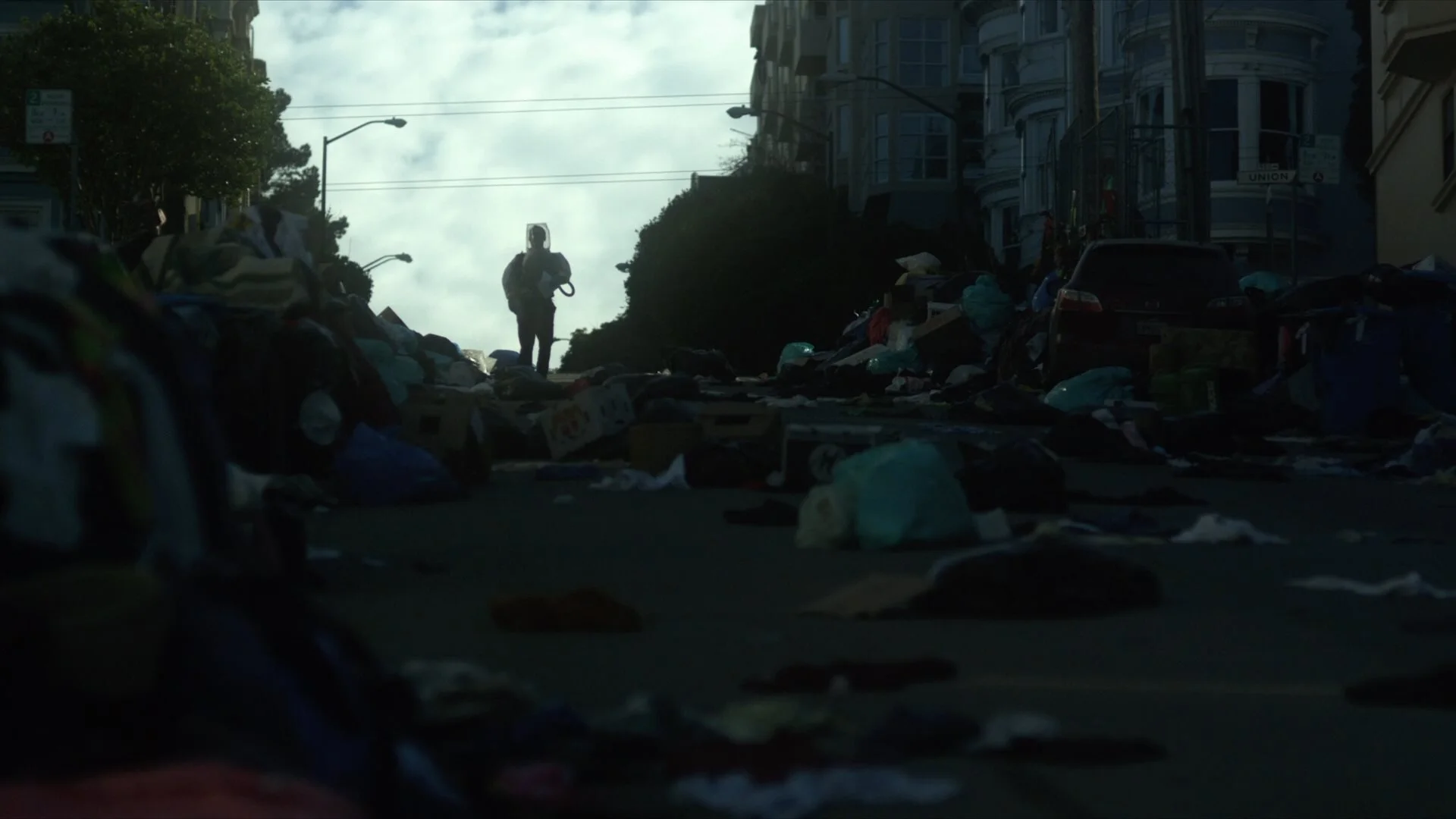
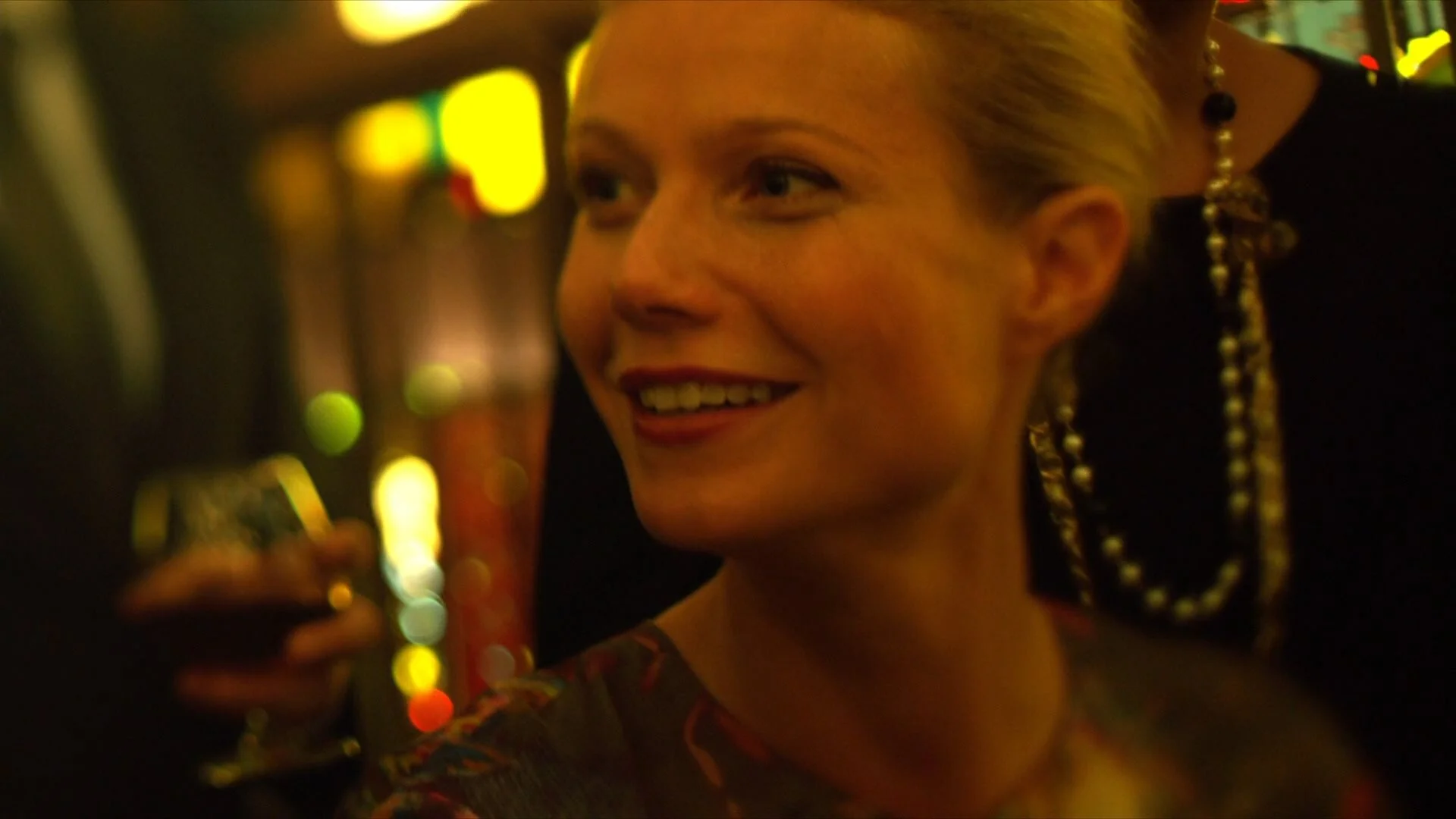
Comparison stills from a variety of Steven Soderbergh’s films:



DOP Steve Yedlin talks digital cinematography:
Referenced videos by Steve Yedlin who shot Knives Out, Star Wars: Episode VIII - The Last Jedi, Looper and many more films. In these two videos, he talks about his approach to cinematography, and how he views digital filmmaking.
Can digital filmmaking not just emulate film, but become it’s own digital aesthetic?
Referenced comparison between filmmaker Don Hertzfeldt’s use of celluloid versus digital filmmaking in his films It’s Such a Beautiful Day and World of Tomorrow:
Don Hertzfeldt’s film It’s Such a Beautiful Day from 2012 was entirely animated and finished on film.
Then in 2015 Don Hertzfeldt switched to digital for his World of Tomorrow movies. These movies are aggressively digital and they completely take full use of the new medium that he's working with.
These films are just as expressive and organic and non sterile as his other work. They're digital and they wear this fact on their sleeve. They use that as a way to reflect the world that the characters are living in.
Céline Sciamma’s Portrait of a Lady of Fire is a period piece shot digitally. It looks almost completely grainless, even in lowlight. Devan argues he thinks the cinematographer Claire Mathon was trying to emulate the gaze of a painter.
Ryusuke Hamaguchi’s Asako I & II is a good example of a film that embraces digital filmmaking qualities in it's lighting and it's colour.
Episode Transcript:
Will Ross 0:00 Hi, I'm Will Ross!
Devan Scott 0:01 I'm Devan Scott.
Will Ross 0:02 We're friends and independent filmmakers. I'm an editor in sound designer, Devan is a cinematographer and colorist.
Devan Scott 0:07 On today's episode we're going to talk about Steven Soderbergh decade and change working with digital cameras after 20 years of working on 35mm film and how that's changed the way he shoots movies like Contagion.
Will Ross 0:17 Welcome to Film Formally! I think it's first worth noting so we say Steven Soderbergh cinematography, and that's not just shorthand, he is actually serves as his own cinematographer on virtually all of his films.
Devan Scott 0:50 Peter Andrews does not exist.
Will Ross 0:52 Right, yeah, that's just his pseudonym. So when did that get started?
Devan Scott 0:56 That technically got started with Schizopolis in 1996, but really started in earnest with Traffic in 2000. I believe he's shot everything since then as Peter Andrews, and I think his filmmaking is visually gotten significantly more interesting as a result. He is very idiosyncratic.
Will Ross 1:17 Do you think there's certain tendencies throughout his career that you can see since Traffic and that makes him idiosyncratic or is he just an evolving beast? Like he's a really diverse guy?
Devan Scott 1:27 I'd say he's both of those things. He's incredibly diverse. Like Ocean's Eleven bears very little visual resemblance to Unsane, except for both have a ton of color and experimentation in them.
Will Ross 1:39 Right, I forgot he shot Ocean's Eleven.
Devan Scott 1:40 Yeah, I know, that's insane. One of the hallmarks of his, I think, his career throughout has been a willingness to experiment with image texture. Everything from the incredibly striking color filters in Traffic, to a typical glossy red, blown out highlights in stuff like Contagion and Haywire, iPhone7 converted to look almost like film in Unsane. He used the film emulation lookup table there along with film grain to give it a texture I've never seen, I think, in a film. So that's I think, if I had to say, a defining element to cinematography since that, is that.
Will Ross 2:21 Right.
Devan Scott 2:22 And I think that does go hand in hand with a lot of other elements of his filmmaking as a director, we can kind of get into those. I'd like to especially focus on his digital work. He has cycled through a number of shooting formats since he became his own cinematographer. He shot, I think, virtually everything between Traffic and Ocean's Thirteen on film, with the exception of Full Frontal which is shot on... it was shot on the Canon XL 1S, which is, as someone who's actually used the Canon XL2, have tremendous visually unappealing camera in the traditional sense. And starting with Che he switched from using 35 to the RED digital camera system, RED being a quite high end, high resolution digital system. That was pretty much the first major knockout success of the digital revolution in terms of convincing high profile 35mm filmmakers to switch over. Steven Soderbergh and David Fincher were two that come to mind as particularly high profile users. I think Fincher's first RED film was The Social Network. And Soderbergh has mostly stuck with the RED since with I believe the exceptions of Unsane and High Flying Bird, which were both shot using the iPhone.
Will Ross 3:50 I think Che is a really interesting start for him using the RED because if you look at just a random scene out of Che what you see is mostly like pretty conventional to early digital, where especially in part one, there's like highlights that are a little bit blown up and clipping in kind of awkward ways quite heavily saturated. Part two, though, is a very different looking film because it's under saturated, it's a different aspect ratio. And even though taken on their own, both parts are not especially unconventional or striking visually, I think they do kind of form an interesting mission statement of him being willing to change up the aesthetic that he's using on a dime to suit the project or even the part of the project that he's working on.
Devan Scott 4:38 I think that really falls in line with Soderbergh's proclivity for really not prizing kind of compositional and filmic perfection. The very fact that he is so willing to clip highlights shows us that he's more interested in decisive visual schemes rather than trying to iron out all the kinks of his visual schemes.
Will Ross 4:57 What do you mean by clip highlights? What is that?
Devan Scott 5:01 Clip highlights are one of the hallmarks of digital image capture. We can get into the weeds on this digital image sensors which are what digital camcorders use and deal with light in a very different way to 35 millimeter or I should call it celluloid film. There's also 16mm, 8mm, 70mm etc. Celluloid film is made out of silver highlight crystals, which block out light as they are exposed to light, they increase opacity. And that's how you get a negative. That's how they measure light, and then that image is reversed and you get a you know, a positive image that looks like what you're used to seeing on a film screen. Digital image sensors actually have little photo sites. They're made of an array of square pixels essentially, that measure the amount of light that hits them and then convert that to a charge and that charge becomes the info that is sent to the computer inside the camera that you know is then translated into images we can see and interpret with our eyes. However, all these photo sites have a limit to how much light they can read. After a while they cannot differentiate between really bright and really, really bright. And that leads to what's called highlight clipping featureless areas of pure white film does not do that and quote unquote rolls off into highlights smoothly. Highlights on film look more like it's almost like been burned through is how it can best put it. And digitally, it generally looks like a hard line between very bright gray and white. Soderbergh makes liberal use of these clips highlights, as a cinematographer your usually trained to limit highlight clipping as much as possible. Soderbergh clearly doesn't. I don't think he's ever really adhere to that rule. I think virtually all all his digital work is rife with that.
Will Ross 6:48 I think a really good example, if you just happen to have it on hand, is if you look at the opening scene of Haywire...
Devan Scott 6:54 The windows in that.
Will Ross 6:55 A character steps into a cafe in this sort of snowy area. And outside the windows, you can very clearly see like parts of the snow that are just plain bright white. There's a sharp line between those bright white areas and the slightly less bright white areas around them.
Devan Scott 7:13 Or take the opening scene of Contagion. And Gwyneth Paltrow is in the foreground, there are fluorescent bulbs green in the background and they are pure white. You cannot make out the bulbs. It's just blobs of white and Soderbergh - most other filmmakers would avoid that at all costs. They would add a bunch of light to Paltrow's face and then expose downwards. But no Soderbergh just let them blow out. And he's never really stopped doing that, even when the RED Epic, which is what Contagion was shot on, has pretty good highlight detail, and he chooses to let that happen. Why do you think he might do that?
Will Ross 7:46 I think it depends a lot on the film. And I think one of the important techniques that Soderbergh uses a lot is, depending on the film, he will soften his highlights.
Devan Scott 8:00 He uses a variety of softening filters, which are basically plains glass you put in front of your lens with various stuff applied to it. And for example, you might have optical softening filters, which is dozens, hundreds of little lenslets, tiny little lenses eshed into the glass or you might just have what's essentially very expensive sandblasted glass.
Will Ross 8:19 Yeah. So for example, in Shade, he doesn't do that at all, he doesn't soften it up. And in Contagion, he doesn't soften it at all.
Devan Scott 8:26 He actually, there is softening in Contagion.
Will Ross 8:29 Yeah?
Devan Scott 8:29 I think the most obvious example is the gymnasium scene with Kate Winslet.
Will Ross 8:34 Oh yeah....
Devan Scott 8:34 There is a lot of softening background there. And you can see it in the streetlights of the exterior scenes. If I had to guess, these look like some sort of smear filters. You get these weird vertical highlight smears that it's hard to say, I can't find any actual info on that, but I'm sure that --
Will Ross 8:52 Correct me if I'm wrong. I think his second film he shot digitally was I think The Girlfriend Experience.
Devan Scott 8:57 Yes.
Will Ross 8:57 And that's when he really started using them and to me on The Girlfriend Experience, the softening reads as him emulating film and The Girlfriend Experience is mostly a more or less conventionally shot movie.
Devan Scott 9:13 There is some digital softening there. There's this airplane scene about 10 minutes and that's been it's like the opposite of a clarity filter. It's been digitally softened and you can really see the difference.
Will Ross 9:24 Right.
Devan Scott 9:24 He doesn't try and hide it. It's very obviously like it looks almost like a very bad Instagram filter.
Will Ross 9:28 Right, but then his next movie after The Girlfriend Experiences is The Informant. And that's when things, to me, that's when digital Soderbergh really starts to get interesting, where he starts doing things digitally that you can't really do in film or is much, much harder to do in film.
Devan Scott 9:47 I agree.
Will Ross 9:47 He softens the hell out of everything in that movie. The colors are super sickly unreal looking, he just pushes certain colors in the frame. Way, way, way beyond the saturation of others, especially usually blues and greens. And everything's just been so softened and the colors are so unnatural you get these like weird blue green skies. So you get the combination of those sort of scuzzy sort of almost brand label colors combined with that heavy, heavy softening, putting a gloss on everything, which makes for a pretty intuitive way to film a satire of corporate America.
Devan Scott 10:28 I think that kind of tendency probably peaked with Behind the Candelabra, which has endless, endless, almost overpoweringly distracting softening done. It looks like it's been done with a variety of filters and stockings. You can actually put a stocking over your lens to do that. That's what Janusz Kamiński does on a lot of Spielberg, but he kept pushing that envelope over and over and over. The Knick too has a ton of that. I think I parallel we can see between Soderberg's use of digital cinematography and his deployment of extremely attractive Hollywood stars. I think one of the hallmarks to Soderberg's career to this point has been finding ways to tweak and undercut the kind of Hollywood star image. This is everywhere.
Will Ross 11:08 Magic Mike. In Magic Mike he shoots everything outside of dance sequences, I think or more almost everything, especially exteriors and stuff in people's homes, he shoots with a double straw filter that just puts yellow all over the frame and makes everything look like there's a layer of urine over it. Which is pretty striking for a movie that was sold heavily for its colorful high contrast, glossy dance sequences in advertising.
Devan Scott 11:36 Or Contagion where the first shot is of, as far as I can tell, unmade up Gwyneth Paltrow now at the time one of the most famous stars in the world, who is shot in one of the most unflattering ways I've ever seen any major Hollywood star shot, who then dies five minutes in and I think that pretty much sums up how he uses stars in that movie. So in Haywire where a creative famous male actors get their ass kicked by a MMA fighter. Soderbergh loves that undermining our expectations for what the people we recognize on screen will do. That's to me that really feels of a piece with his digital filming where he does all he can to de-glamorize most of the people he shoots, unless he really really wants to go far with that and glamorize them to the point of almost self parody and stuff like Behind the Candelabra.
Will Ross 12:23 He uses very low contrast. And often when you have low contrast, you can sort of offset it partly with color differentiation, but he also often tends towards fairly monochromatic palettes as well.
Devan Scott 12:37 Yeah, and I would say monochrome is a key word here. And I want to differentiate that from grayscale. Monochrome meaning most of his shots will have lots of color, they'll just have one color. You can see that probably most famously in Traffic, where each of the separate stories in that hyperlink narrative is given one color, and similarly Contagion has that. It's a bit less tied to the individual narratives and more, just every special has its own extremely striking color, green, blue for the gymnasium, etc, etc. And that really flies in the face of traditional ideas of how to shoot actors. As a colorist, you are trained to stick to skin tones usually, you know, and this can be seen in Contagion where, despite the fact that the color is less tied to individual plot strands, it's tied to locations, right? So you have the blue gymnasium, the yellow green in the CDC offices, and that lends a lot of tonal rhythm to the film I think and a lot of instant geographic readability, right? You know where you are.
Will Ross 13:38 One question I do have and this ties into the actors not being very flatteringly shot is in a lot of Soderbergh's movies, and it's very prevalent in Contagion, characters will have pretty underexposed faces. In other words, their their faces are quite dark on screen. But the highlights still remain quite bright. How would you describe that as a flat contrast curve? Is that what what would that be?
Devan Scott 14:07 I'd say it's more of a lack of willingness to light the actor is a conventionally attractive way. To shoot scenarios where the reality of the lighting takes precedence over the need to massage that later, right? If I was to light a scene with an actor in the foreground, from a very bright window in the background, I might add a very bright light, you know, like some sort of 3000 watts, you know, HMI or something on the actor's face to even that light out, right. Soderbergh is much less willing to do that. And I think he foregrounds that for the sake of, I think there's a lot of reasons, but in Contagion, it feels like it's intentionally trying to make everyone look as horrible and sickly as possible at all times.
Will Ross 14:47 I think it's worth noting that, especially after he starts making movies digitally, a lot of Soderbergh's movies are sickly looking movies about sick people. Right? I mean, you have most obviously Contagion. You have Haywire, which makes the sort of world of the action spy thriller look a lot less visually appealing. I'm not sure exactly how well that stratagem works there. But then you have Side Effects, which is on top of that sort of sickly look a very hazy movie. That's one where the softening filter gets absolutely cranked up to 11. And the whole thing just is hazy and sickly, and everyone looks terrible in it. And then later on, you have Magic Mike, where all the material outside the club is really sickly and implicitly that's because they're living in a world where everyone is sort of dehumanized and sick in a more spiritual way. And then you have Unsane which obviously is about a mental health facility and so a lot of his movies that shoots digitally, really benefit from him not being interested in flattering his actors. But another thing I wanted to bring up along those lines is that another reason, besides just flattering the actors, to shoot actors with somewhat brightly lit faces is so that the actors faces aren't competing for attention with whatever other highlights there are in the frame. So if there's a lamp in the frame, it's not just this big, bright, glowing spotlight while the actor is just some dark mush in the corner of the frame amongst all the other shadows, right. So that's that's sort of something that Soderbergh plays with the scene in haywire. I mentioned where there's the snow outside, I think is a good example of him. Not making that work well, because all you can do in that scene is look at the big radioactive glowing white outside the window, but a lot of Haywire and a lot of his other digital movies are quite smart in the way that they use those highlights to compensate where they'll pepper them throughout the frame a bit more liberally so that your eyes not just immediately drawn to a single focal point at the expense of the actor or he'll my one of my favorite things he does is he halos, the actors, so he puts the light more or less evenly around their body or around their head, so that the light is an accentuation. It's an outline for the actors so that our focus stays on that character.
Devan Scott 17:35 I think that's a good break down in the composition, unusual compositional tools he uses. Your mention of Unsane got me really thinking about focal lengths. Because Unsane is fairly interesting in that on a cell phone, you're stuck with a very narrow range of focal lengths. And when I say focal lengths, I mean, essentially how far lenses zoomed in, in that, if you're on a 20mm lens, you have a very wide field of view. You can see a lot in front of you; the cone of vision is wide. On a 300mm lens, very narrow cone of vision. It's almost like you're zoomed in very far on something in the distance. In Unsane it's largely shot on very, very wide focal lengths. So you'll have shots where actors are as a result of those wide focal lengths, you know, distorted in corners of the frame. There's one shot that I loved where Claire Foy is lying on a bed, and her face is in the bottom left exact corner of the frame and it is distorted more than I've ever seen any a-list actor distorted and perfectly matches the moment right? This character doesn't know whether they're going insane or not.
Will Ross 18:39 Their going Unsane.
Devan Scott 18:40 Their self perception is being literally and figuratively skewed. That was fun.
Will Ross 18:47 Yeah, I think Unsane and High Flying Bird are a good example of how Soderbergh takes digital technology seriously, not just in terms of what it directly brings to aesthetics, but I think he's just fascinated with the other implications of the form, like the commercial democratization of the form that a lot of people talk about. Shooting a film or two feature films entirely on an iPhone and doing them in completely different styles, I think is a good example of a filmmaker who's taking that completely seriously, because in Unsane, you'll see he uses the very wide focal length, I think most of it was shot 18mm on that adapter, but uses a very, very wide focal lengths that are pretty common to smartphones. And those focal lengths make it pretty hard to shoot close ups of actors without distorting them because typically, in a close up of an actor, they're filling the screen and if you're that close to an actor on a wide lens, then you tend to distort them, which might not be what you want. And that's a pretty common way actually to suggest a psychological distortion to this toward the character in, close up, but Soderbergh doesn't do that most of the time and Unsane he uses pretty clever methods, like he will give the actors a lot of what's called headroom, which means that there's a lot of room between the top of the characters heads and the top of frame. Convention is usually to, more or less minimize headroom in anything but a very wide shot, but by giving them a lot of headroom, he allows the upper parts of the frame which are usually the ceilings of this facility, he allows the upper parts of the frames' lines to sort of comment on and complicate the characters. So their headspace above their heads is literally used to get into their headspace and on the other hand, High Flying Bird, which personally I think is a much less visually successful film, is more or less conventionally framed most of the time.
Devan Scott 20:56 One thing I noticed though, is the aspect ratio. Unsane is shot at a 1.5:1 ratio, which is very unusual in films, very common in still photography, but in films, it's hugely uncommon. And then High Flying Bird is shot CinemaScope, 239:1. And I actually think that Soderbergh is in general a much better user of tall aspect ratios, I think his 185 work, his 178 work, and his 1.5 work in that case tends to be superior to his CinemaScope work, especially in his later films. I think Logan Lucky is a good example of not what I call his best framing. I have some issues with that films use of focal lengths and CinemaScope in enclosed spaces. I'm not sure that the distortion is an asset in that film in the same way it isn't Unsane. I couldn't quite jive with it both instinctually and intellectually.
Will Ross 21:49 And I think Logan Lucky is an interesting film too, because it's the first digital film that he'd made at least since I think The Girlfriend Experience that looks -- it's a pretty conventional looking movie for the most part.
Devan Scott 22:07 It doesn't have those crazy color washes he's used almost omnipresently since.
Will Ross 22:10 Yeah, like you see him pushing the exteriors a little more towards the greens going outside then you'd maybe normally expect in a movie with a bunch of a list actors, but for the most part, it doesn't look that much unlike what you'd expect a regular Hollywood film to look like. And I think that's and that brings up another point I want to make, which is that before he went digital, Soderbergh was pretty clearly I think, an extremely capable cinematographer who could shoot movies that didn't look crazily unlike other movies that were quite striking, but still didn't look totally out of line with what you'd expect from a multiplex experience.
Devan Scott 22:56 Yeah, like Oceans 11 looks not unlike something like Casino in a lot of ways, for example.
Will Ross 23:02 Yeah. And they're great looking movies, though, I would say his more visually unusual movies from his celluloid period are actually his less impressive looking movies. And then that flips on its head in his digital period where the more conventional looking his movies are, or at least the more conventional his sort of aesthetic approaches, the worst looking they tend to be. Yeah, and I'm not I'm not entirely, I haven't really internally resolve that in my head. Except maybe...
Devan Scott 23:34 I wonder if it's a Spielberg?
Will Ross 23:35 ...that when he switched to digital, he just has this internal tool set for what digital can do. And it's just not, unlike someone like, famously, Roger Deakins, who uses digital tools more or less as an extension of the philosophy of photographing for film, he might just fundamentally have a different starting point for how he approaches digital, but I'm not sure how to articulate what that starting point would be.
Devan Scott 24:02 I have two thoughts on that. First is on the almost like the "you can't go home again" aesthetically thing. Where it feels almost like it could be a Steven Spielberg situation where his formal toolkit has just evolved. He's changed as a human and as an artist and going back is difficult when you've done that. I use this over comparison because, you know, in the Nazi era in the 90s is when he really started becoming more visually and tonally experimental and darker. And then he you know, he goes back to shooting Indiana Jones movie with his new cinematographer Janusz Kamiński. And I think it's his worst looking film of the past 30 years, because it feels like he's trying to almost emulate his former self and that almost feels like when Logan Lucky is. It's like, "hey, I want to shoot Oceans 11 again," but he's almost the muscles that he used to shoot Oceans 11 have atrophied in lieu of other slightly more unconventional ones. And secondly, I want to expand on the Roger Deakins thing, when we get a chance because that whole idea of shooting digital to look like film I think is an interesting counterpoint to all this.
Will Ross 25:11 Right... here's your chance.
Devan Scott 25:14 [Laughs] Okay. So I think, the Roger Deakins I would call school shooting digital, fascinates me as almost the flip side to all this. Soderbergh and some other directors, and I think that number is actually dwindling increasingly, elected to try and create a whole new aesthetics digitally. I think The Social Network was the moment where that clicked for me, where David Fincher use the RED One, a very high resolution digital camera, and then d-noised it hugely, which means that he used a computer algorithm to limit the amount of grain in the image to create a very plasticy movie, and it felt like a computer interface turned into a live action film. There was no texture to anything. I thought it was gorgeous. In the ugly Fincher way. If we look at the evolution of how digital has evolved in kind of the aficionados/professional consciousness in the early 2010s, we had a ton of discourse around the perceived kind of inherent differences between film and digital, where digital was always seen as antiseptic, clean, you know, almost sterile, and film was seen as organic authentic these, I think, slightly useless adjectives. But what happened with especially the release of the ARRI Alexa, ARRI being a camera company who was probably the most prominent maker of 35mm cameras in the world, I believe. At least one of them. They made probably the I think the single most important digital camera for Hollywood at least which is the ARRI Alexa, which is a camera designed to appeal to people who shoot on 35mm. It has an image texture and color science that attempts to replicate almost this ideal of what film looks like and it was designed in consultation with various cinematographers such as Roger Deakins. And of course a lot of them jumped on board. It almost felt like at the time he jumped to that, and then everyone else followed suit because everyone's like, "oh, if it's good enough, Roger." And since then we've seen a massive increase in the amount of digital films, prestige films, blockbusters, you know, it's almost universal now. So you had almost a second or third wave of digital filmmaking, where we started coming closer and closer and closer to replicating the look of film with digital. If anyone wants to see Steve Yedlin videos, look them up online. He's Ryan Johnson cinematographer. I think he is probably the world's best educator on the subject. We, I think in around the mid 2010s, late 2010s, kind of eventually got to a point when you can realistically shoot something on the ARRI Alexa and other cameras that was almost indistinguishable to an audience for film and at this point, talking in 2020. We are there. As a result, that kind of impulse to create a parallel aesthetic I think has, not died, but it's been sidelined. I don't see many major filmmakers still fighting that fight, which I think is pretty tragic. And I include myself among that. I've spent a lot of time in the past few years learning how to better emulate film.
Will Ross 28:19 Yeah, I think one of the big reasons for that has got to be that sort of a lack of imagination for what a digital aesthetic can create in a narrative setting. Part of that just got to be the limitations of Hollywood style narrative filmmaking, right? I think one of the filmmakers who has done the best job of busting sort of the notion that a digital aesthetic is inherently more clinical, or less, quote, unquote, organic aesthetically, is Don Hertzfeld, who made his movie It's Such a Beautiful Day and all of its previous work entirely animated and finished on film, and then switch to digital for his World of Tomorrow movies. And those movies are aggressively digital. They completely take full use of the new medium that he's working with. But they're also just as expressive and organic and non-sterile as his other work. They're digital and they wear the fact that they are made on computers on their sleeve, but they use that as a way to reflect the world that the characters are living in. And I wonder if, part of me thinks that the only way you can adapt to new ideas to make it look like an old idea. And I guess that's what we're seeing with digital cinematography now. And I wonder if there's ways to incorporate the new ways to use digital cinematography into those more conventional films that isn't just "Oh, this looks sterile. This looks sick." And from what I've seen, so far, it seems like Soderbergh hasn't quite cracked that nut yet.
Devan Scott 30:05 I think Unsane is a really interesting kind of paradoxical example of this where it was shot on an iPhone, which probably has more of the qualities we would associate with that digital sterility than anything else. But use film emulation plug in, to me, it looks like Film Convert and a green generator or green loop to add the sunless patina of ______ to it, and it's both foregrounding that and the phone-ness of it. So you have this weird fusion of, and I think very successful fusion, of elements that we would share typically associate with film elements we stereotypically associated with low grade consumer video. And to me that is almost the opposite of what he was doing with stuff like Contagion where he was borrowing, non textual elements of 35mm like depth of field and combining that with an aggressively digital almost image finishing process, which shows me that he's really thinking about every single part of the image, which is interesting. Are there any modern films in the past couple of years that you think use digital image capture in a way that doesn't try and overly emulate film that stand out to you?
Will Ross 31:22 That stand out to me? Give me -- give me a second to think about that.
Devan Scott 31:26 One comes to mind for me while you think about it, which is Céline Sciamma Portrait of a Lady on Fire, which…
Will Ross 31:33 I haven't seen that yet.
Devan Scott 31:35 Which you should! It's fantastic. What she and her cinematographer Claire Mathon... I probably horribly mispronounce your name Claire, I'm sorry. It was shot on I believe, I think it was shot an 8k on the RED, which is unusual because it's a period piece and generally Hollywood cinematographers, all right, not Hollywood, but prestige cinematographers like I would say, try and shoot period pieces on film or something that looks like film and this in fact, it does not look like film. It looks like it's almost totally grainless. The lowlights cinematography is clean. The colors do not try and emulate any film stock that I know of. But what it does do is it, I think tries to emulate the gaze of a painter. Doesn't even try and emulate a painting. I think it's trying to emulate how a painter see the world. And it subtly tweaks our expectations for what a period piece might look like to do so and I think it's incredibly successful with that. But that's the exception. I can't think of many other films in the past year or so that have really impressed me with forging new ways of using digital image capture.
Will Ross 32:43 It's kind of a catch 22 of a question to me, because if it looks very distinctly digital, if it looks like it's not emulating film and it's in a conventionally shot narrative film, then those things aren't compatible with each other at this point in my head, because if it's a conventionally shot film, then it's going to look like something pretty analogous to film.
Devan Scott 33:09 Perhaps. Although I would say that the formal conventions of classical Hollywood cinema don't necessarily rest on that filmicness, right? A lot of it is the blocking, the framing, the continuity. I think a film that maybe breaks all that could Bi Gan Long Day's Journey into the Night, which is I've only seen the 45 minute shot because I have a low attention span. No, I'm gonna watch it.
Will Ross 33:33 [Laughing at Devan]
Devan Scott 33:34 But, but he uses both the kind of quote unquote limitations of digital which is, you know, that noise, that clinical feel that people distribute that I take issue with, and I take issue with the idea, not the aesthetic, and combines that with the possibilities of digital camera placement to create, you know, in the case labs, I'm a 40 minute-ish, is probably longer, shot that switches camera mediums multiple times and does things that I did not think were possible before watching that film.
Will Ross 34:07 Oh and Asako I & II by Ryusuke Hamaguchi, I think is a very good example of a film that definitely embraces digital filmmaking qualities in it's lighting and it's color in its... I think that's another. Maybe wrapping up: do you have a favourite....
Devan Scott 34:26 Wait wait wait. What about Cats? Cats!
Will Ross 34:28 Oh my god. All right, talk about Cats.
Devan Scott 34:36 No. [Laughs] Cats is utterly digital, but I think it's failing something to do with the digital-ness, which actually gets me to like one point which is...
Will Ross 34:45 ...digital fur technology, right?
Devan Scott 34:47 I mean, when we're talking about digital image capture, I think a lot of people are very quick to blame any perceived failings of an image on that digital image capture when I think that oftentimes there miss diagnosing and I think people should stop that. That's my thought.
Will Ross 35:06 Good analysis.
Devan Scott 35:07 It takes deep takes and hot quotes.
Will Ross 35:11 What's your favorite looking Soderbergh movie?
Devan Scott 35:14 Ooff. That's hard. I think pre-digital Traffic, post digital it's probably Contagion or Side Effects. I don't know man, like Contagion has those color rhythms that I just love.
Will Ross 35:36 Contagion is such a cool looking movie, and maybe it's just... Side Effects looks like no other movie ever made. And it has like some of the most incredible, medium and close up compositions I've ever seen. It's just insane. It's just it's amazing. It's an amazing, it's an amazing movie in general. It's my favourite Soderbergh. But visually, it's so inspiring to me. Would you rank Traffic over Contagion and Side Effects? Is that your favourite?
Devan Scott 36:07 I have a hard time comparing and I don't know if I could rank them.
Will Ross 36:11 You just like them because they're wacky because they're wacky with colours.
Devan Scott 36:14 Yeah, no, that's me. Right? I mean, you know, Yeah, I know.
Will Ross 36:18 Your heart says Contagion and Traffic, but your head says Side Effects.
Devan Scott 36:23 I mean, I am a staunchly anti-substance pro style person. I am shallow and vain, and not a very good human being.
Will Ross 36:33 Well, you want movies about vain, bad people with shallow depth of field, you know where you go. You watch Side Effects.
Devan Scott 36:44 This is true, but that maybe has substance, so you know, I can't. I can't endorse it.
Will Ross 36:51 I guess it's a good time to wrap up. If you want to come on the show or have an idea for a topic we can discuss. You can get in touch by email via filmformally@gmail.com or you can find us on social media or Twitter or Facebook at Film Formerly. We'd like to acknowledge that this podcast was recorded on the unceded territory of the Musqueam, Squamish and Tsleil-Waututh peoples. If you like this podcast, be sure to rate it, review it and subscribe to it really helps other people find it. Next episode we're going to be discussing what it's like to take a super scaled down approach to making movies with Toronto director Sophy Romvari. See you then!
Episode 0 - Welcome to Film Formally!
In this intro episode we offer a taste of our podcast, with a quick rundown of our format and a few samples from upcoming episodes. If you're tired of movie podcasts that reach a mile wide and an inch deep, we've got just the thing for you, with focused and lively conversations that stick to specifics — one episode, one technique.

In this intro episode we offer a taste of our podcast, with a quick rundown of our format and a few samples from upcoming episodes. If you're tired of movie podcasts that reach a mile wide and an inch deep, we've got just the thing for you, with focused and lively conversations that stick to specifics — one episode, one technique.
FILM FORMALLY

Film Formally gets granular about how movies work by choosing a technique or trait and studying it through its best examples. Every Tuesday, Independent filmmakers Devan Scott and Willa Ross leverage years of watching and making movies to bring you spirited and approachable conversations, offering brick-by-brick analysis and discussions about how movies work.
Associate Producer: Paige Smith
Current season edited by Amanda Avery
Got an idea? A guest you’d like to hear from? Give us a shout at filmformally@gmail.com.